

Accommodative Intraocular Lens Technology Explained
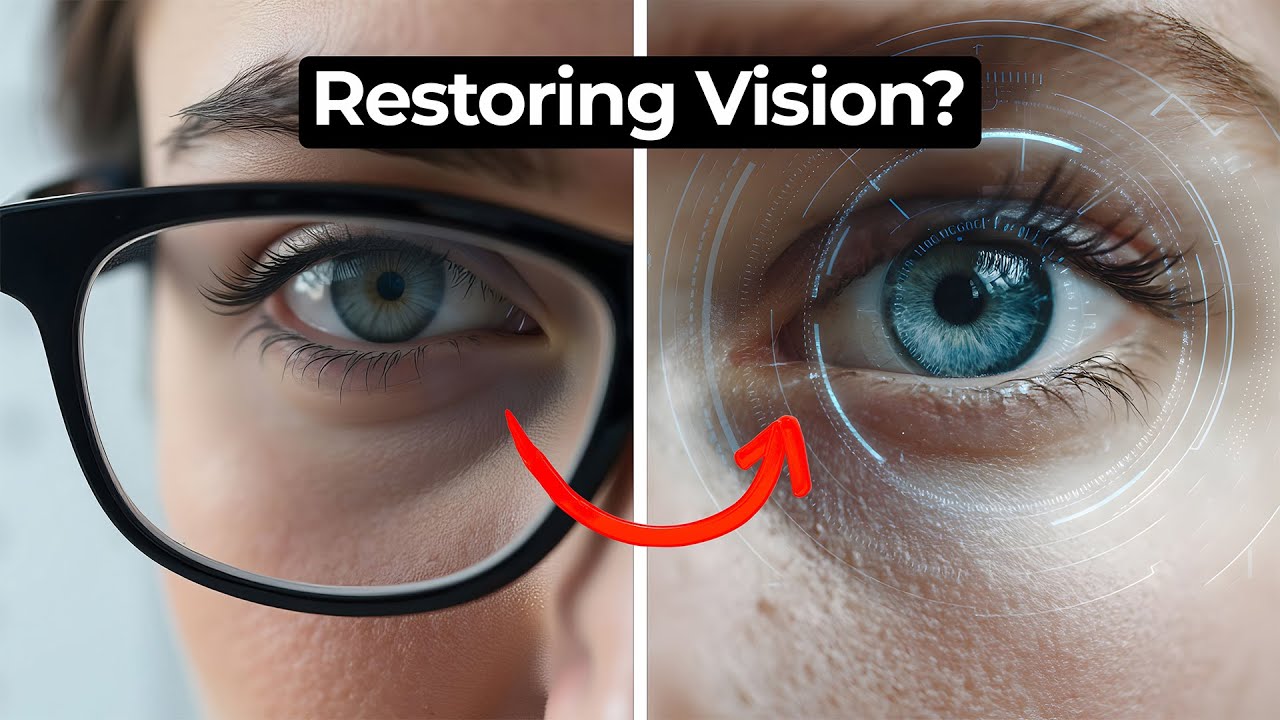
Ariana just got bifocals and isn’t happy about it. In this episode of MedDevice by Design, she and Mark discuss accommodative intraocular lenses, an emerging category of medical device that could one day replace the need for reading glasses after cataract surgery. Mark has been watching the space closely, and has strong personal reasons to hope it delivers.
What Is an Accommodative Intraocular Lens?
Standard cataract surgery replaces the eye’s natural lens with a hard piece of plastic. That replacement lens has a fixed focal distance, which means patients will need reading glasses permanently. An accommodative intraocular lens is designed to behave more like a natural lens by changing its focal distance, allowing the eye to shift between near and far vision.
One product already exists on the market: the Crystalens. It provides a low level of accommodation but consistently falls short of the roughly one and a half diopters needed for full reading and distance vision. It also has other challenges. So while the category exists, Mark’s assessment is that it isn’t quite there yet.
How the Triple Venn Diagram Applies
Mark connects accommodative intraocular lenses to a framework he and Ariana have discussed previously: a triple Venn diagram that looks at a device opportunity through three lenses, company, regulatory, and product. For accommodative IOLs, the regulatory picture is favorable because an existing predicate exists. The business case is strong: it is a billion dollar market with many players and established track records. The problem is the product itself. Viability and desirability are well understood, and ophthalmologists performing these surgeries need the device to work within their existing workflows, but feasibility remains the unsolved challenge. As Mark puts it, nobody has developed the solution that actually delivers accommodation in a natural way.
Who Is Working on It
Several companies are in the clinical stage working toward a viable accommodative IOL. Mark names LensGen, which has been around for a while and is waiting to conduct its larger clinical study, along with Jelly, Omniview, FluidVision, Synchrony, and AIA Vision as a newer entrant. None are cleared yet. Mark is watching the space closely with a personal interest in being an early recipient when one becomes available.
What this episode covers
- Why standard cataract surgery results in permanent dependence on reading glasses, and what accommodative intraocular lenses are designed to do differently
- The Crystalens as the one existing market product, its limitations in delivering sufficient accommodation, and why the category is still considered emerging
- Mark’s application of the triple Venn diagram framework to accommodative IOLs: strong regulatory footing and a billion dollar market, with feasibility as the remaining unsolved problem
- The distinction between viability and desirability, which are well understood, and feasibility, which remains the core technical challenge
- The companies currently in the clinical stage working toward a viable accommodative IOL, including LensGen, Jelly, Omniview, FluidVision, Synchrony, and AIA Vision
- Mark’s personal interest in the technology as someone hoping to eventually receive an accommodative IOL himself
Enjoying MedDevice by Design? Sign up to get new episodes sent to your inbox.
Related Resources

Nigel Syrotuck breaks down REACH SVHC compliance for teams working with material suppliers and compliance questionnaires.

We examine when computational modelling and simulation, or CM&S, genuinely supports medical device simulation strategy and when it becomes a costly detour.
Many teams still underuse CM&S, often bringing it late in device validation, when key decisions have already been made. That approach leaves much of the value of CM&S untapped.

This article traces the Pennes bioheat equation from its 1948 origins to modern multiscale approaches, explaining how engineers select the right level of modelling complexity across device categories.