
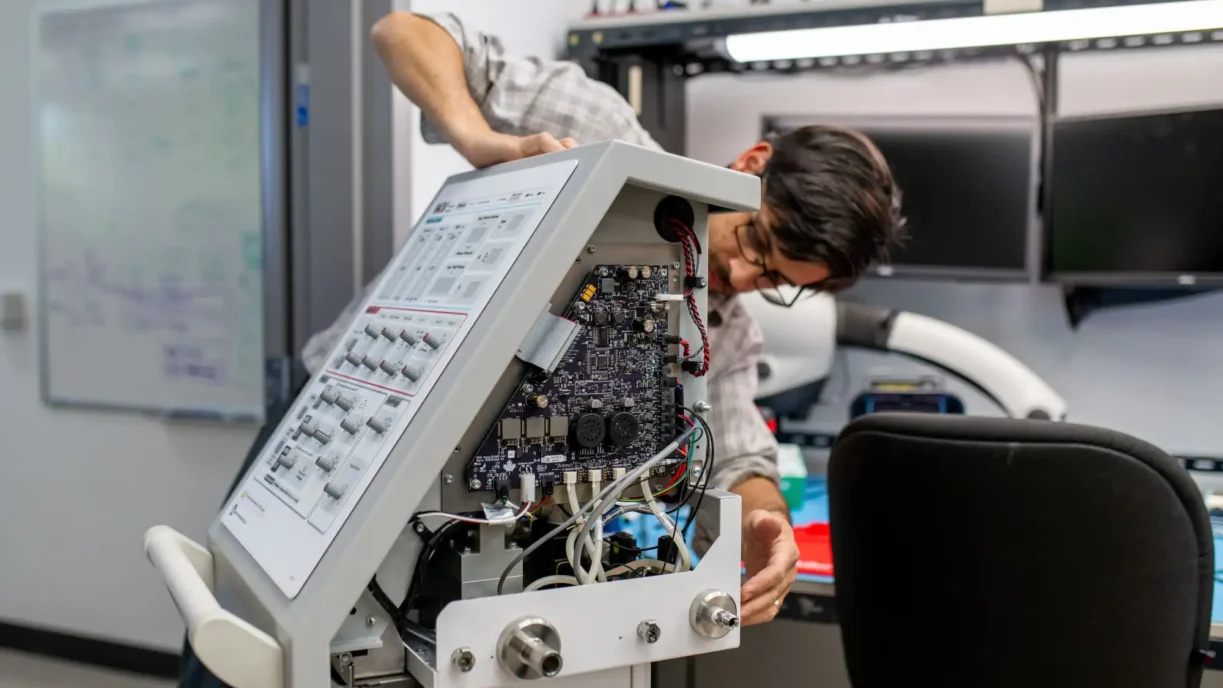
End-to-End Electronics Design: Why the Same Team Should Design, Layout, and Bring Up Your Hardware
TL;DR
Splitting electronics design across separate architecture, layout, and bring-up roles looks efficient but works against how EE actually functions:
- Architecture and implementation constantly inform each other, so fragmenting responsibility breaks the feedback loop that catches trade-offs before they become expensive.
- Teams that keep one engineer or a tightly integrated team owning a board across its lifecycle retain design rationale, leading to faster bring-up and more confident debugging.
- Integrated EE ownership reduces board spins by building compliance and risk mitigation into hardware early, instead of letting it slip downstream into harder-to-validate software.
Modern hardware development often tries to mimic software workflows, dividing the work, parallelizing aggressively, and moving fast. Electrical engineering, however, doesn’t lend itself to that. Splitting EE work across architecture teams, schematic designers, layout specialists, outsourced vendors, and offshore partners may look efficient on a spreadsheet. But in practice, it introduces risk, delays, and integration surprises, particularly in highly integrated, regulated products.
Electronics Design Requires Constant Feedback Between Architecture and Detail
A good electrical engineer must operate in two modes at once. On one hand, they must think at the system level, considering how a board supports functional requirements, how it fits mechanically, how it interfaces with firmware, and how it will be tested and certified. On the other hand, they must live deep in the details of individual circuits, timing constraints, and layout nuances. Critically, those perspectives constantly inform each other. Decisions made during schematic capture affect layout. Layout decisions change bring-up behavior. Bring-up and testing influence future architectural choices. When these responsibilities are split across narrow roles or separate vendors, that feedback loop weakens. Important trade-offs get missed, not because anyone is careless, but because no single person is carrying the full picture.
Want more insights like this? Join our monthly newsletter.
Parallelization Works for Mature Products, Not for Complex Regulated Development
It’s worth acknowledging that parallelization is not always the wrong approach. In large, mature, or commodity-style products, where architectures are stable and risks are well understood, dividing work across roles can be effective.
However, this model tends to break down in early-stage development, highly integrated systems, regulated products such as medical devices, and milestone-driven programs where schedule and risk matter more than local efficiency.
In these contexts, unknowns dominate. The value doesn’t come from optimizing individual steps; it comes from continuously balancing system-level decisions with implementation details. That balance is difficult to achieve when responsibility is fragmented.
Why “Fail Fast” Often Fails in EE
“Fail fast” works best when iterations are inexpensive and feedback cycles are short. In electronics, they rarely are. When a board is designed by someone who will never bring it up, test it, debug it, or sit with it in an EMC chamber, critical context is missing. Designs may meet immediate requirements yet fail to anticipate future revisions, manufacturing realities, or integration challenges. Instead of failing early, problems often surface later when changes are hardest to implement, most expensive, and most disruptive to program timelines.
End-to-End Electronics Design Preserves the Context That Handoffs Destroy
When one engineer, or a small tightly integrated team, owns a board across its lifecycle, knowledge sticks. Design rationale doesn’t disappear between handoffs. Debugging insight accumulates instead of resetting. The engineer diagnosing an issue understands not just what is failing, but why a decision was made in the first place. This institutional memory shows up in faster bring-up, quicker root-cause analysis, more confident judgment calls, and smoother future revisions. In contrast, highly compartmentalized workflows often leak knowledge at every boundary. Each handoff becomes an opportunity for context to disappear.
One Owner Doesn’t Mean One Person Working Alone
End-to-end ownership is sometimes misinterpreted as a single engineer working in isolation. In practice, it’s the opposite. Clear ownership creates a focal point for collaboration. While one engineer may carry responsibility for the board, peer review, whiteboarding, design reviews, and informal problem-solving happen constantly. Other engineers contribute perspective and challenge assumptions, but accountability remains clear. End-to-end ownership doesn’t eliminate collaboration. It gives collaboration a center of gravity.
Fewer Board Spins, Better Milestones
In milestone-driven development, as is typical in medtech, each board spin carries significant weight. Funding, validation progress, and program credibility often depend on hitting meaningful functionality quickly. Teams that integrate architecture, schematic design, layout, and bring-up are far better positioned to make early, intentional design decisions that reduce the need for repeated revisions. The goal isn’t perfection; it’s getting far enough in one spin to materially advance the program.
Medical Device Electronics Demand That Compliance Gets Built In, Not Bolted On
Medical electronics demand early consideration of risk, safety, and regulatory constraints. Integrated EE teams naturally bake mitigations into hardware, often reducing downstream software burden and simplifying compliance. When responsibility fragments, mitigations slip to software, where validation is harder and regulatory complexity grows.
Designing Electronics Is a Systems Problem
In sum, the most successful hardware teams don’t optimize for speed in isolation. They optimize for clarity, ownership, and integration. When the same engineers design, layout, and bring up electronics, teams retain knowledge, reduce risk, and move through development with fewer surprises. In complex, regulated, or high-stakes products, that integration is often the difference between hitting milestones confidently and finding problems when they’re hardest to fix.
Astero StarFish is the attributed author of StarFish Medical team blogs. We value teamwork and collaboration on all our medical device development projects.
Images: Adobe Stock
Related Resources
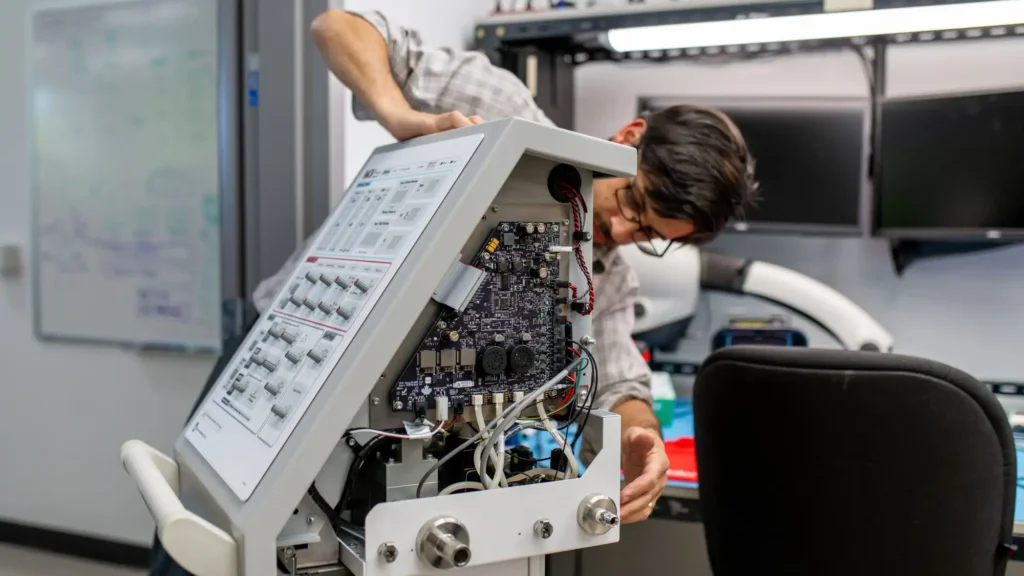
When one team designs, lays out, and brings up a board, knowledge sticks. Splitting that work across specialists looks efficient but creates the risk it’s meant to avoid.

AI coding agents like Claude and Codex are helping EE teams turn concepts into tested hardware in weeks, not months, without adding a new vendor or software dependency.
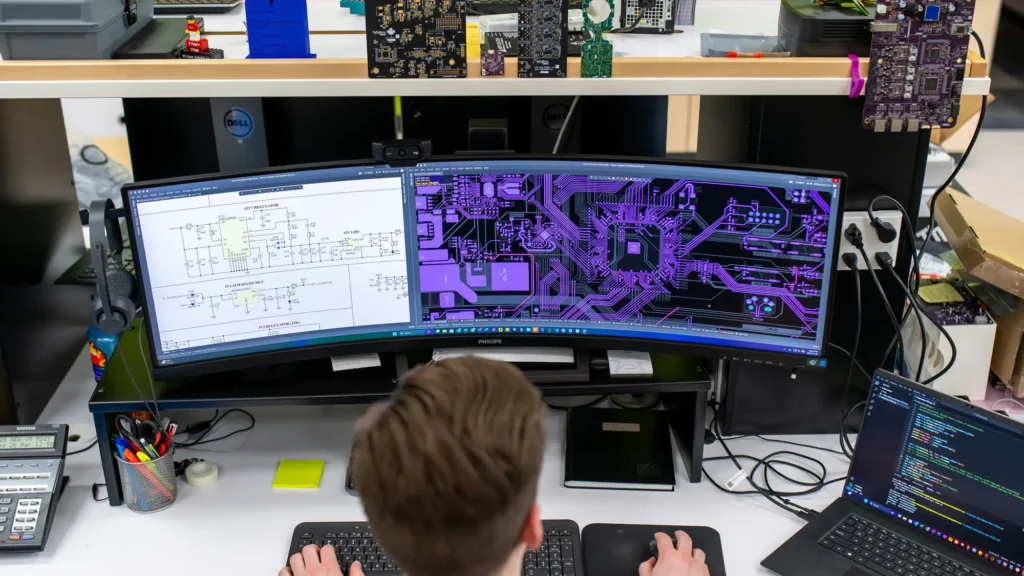
PCB stack-up shapes signal integrity, EMC performance, and manufacturability long before layout begins. Getting layers and reference planes right avoids costly redesigns later.
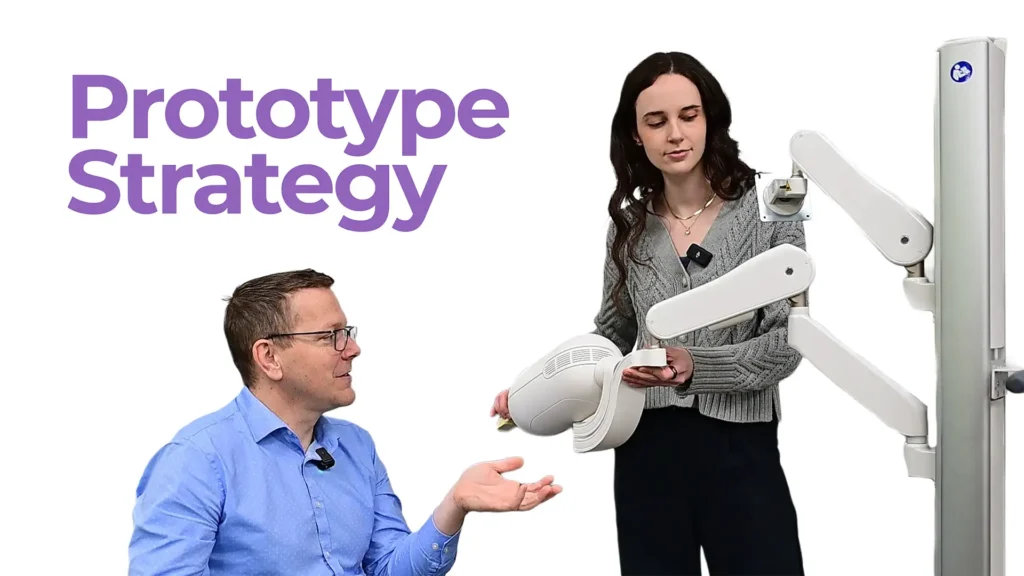
Ariana and Mark explore how prototype strategy helps teams reduce technical risk and accelerate progress.
Explore Our Services

Our multidisciplinary teams have all the in-house capabilities to transform your medical device from concept to final product.

Medical device design and development with a commercial launch focus. See how we support clinical trials and facilitate seamless tech transfers.

We help you navigate complex regulatory landscapes to achieve commercial success. Explore our integrated approach to quality and regulatory services.